The Science of Spaced Repetition: How to Remember Everything You Study
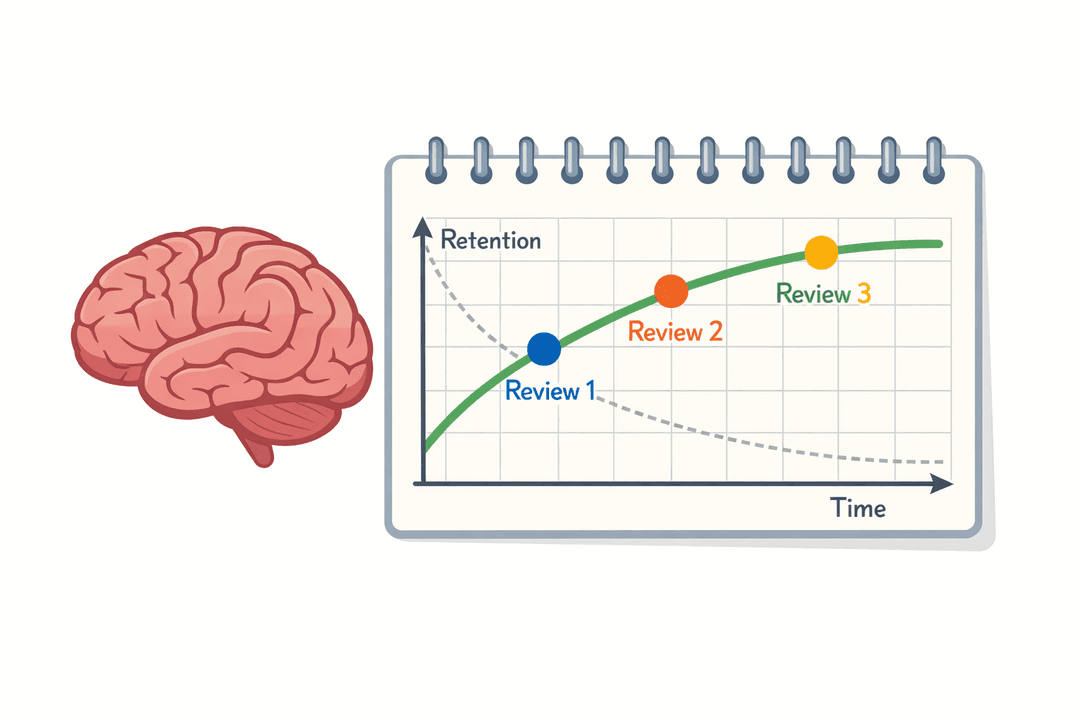
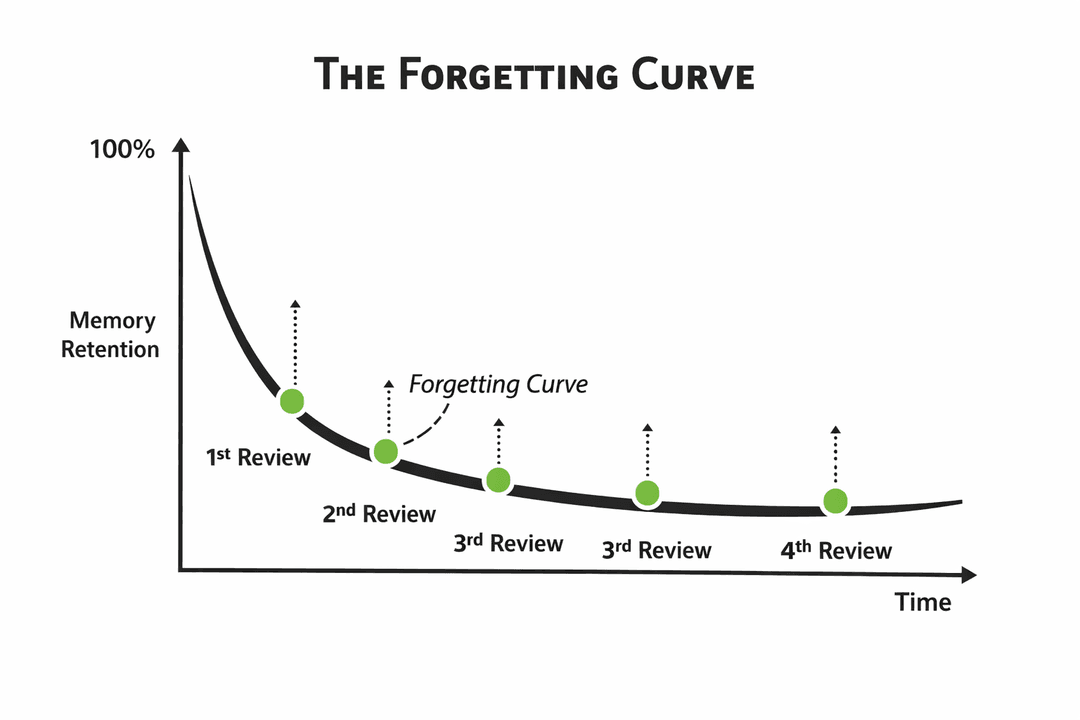
Have you ever spent hours studying for an exam, only to forget most of it within a week? You're not alone. Traditional cramming methods lead to what researchers call the "forgetting curve" – a rapid decline in memory retention that leaves most students frustrated and exhausted.
But what if there was a scientifically proven method to remember almost everything you study? Enter spaced repetition – the learning technique that's revolutionizing how students around the world retain information.
What is Spaced Repetition?
Spaced repetition is a learning technique that involves reviewing information at gradually increasing intervals. Instead of cramming all your study sessions into one night, you spread them out over days, weeks, and even months.
The concept is based on the spacing effect, a phenomenon discovered by German psychologist Hermann Ebbinghaus in the 1880s. His research showed that our brains retain information better when we review it at strategic intervals rather than all at once.
How the Spacing Effect Works
When you learn something new, your brain creates neural pathways. Without reinforcement, these pathways weaken over time – this is forgetting. However, each time you review the information just before you're about to forget it, you strengthen those neural connections.
Here's what makes spaced repetition so powerful:
- Optimal timing: Reviews happen right before you forget
- Active recall: You're forced to retrieve information, not just re-read it
- Efficient use of time: Focus on what you're about to forget, not what you already know
The Science Behind Memory Retention
Research from cognitive psychology has consistently shown that spaced repetition leads to significantly better long-term retention compared to massed practice (cramming).
Key Research Findings
- 200% improvement: Studies show spaced learning can improve retention by up to 200% compared to cramming
- Long-term benefits: Information learned through spaced repetition is retained for months or even years
- Less total study time: Despite better results, total study time is often reduced
How to Implement Spaced Repetition in Your Studies
The Basic Algorithm
The most common spaced repetition schedule follows this pattern:
- First review: 1 day after initial learning
- Second review: 3 days after first review
- Third review: 7 days after second review
- Fourth review: 14 days after third review
- Fifth review: 30 days after fourth review
This pattern continues, with intervals growing longer as the memory becomes stronger.
Using Flashcards Effectively
Flashcards are the perfect tool for spaced repetition because they:
- Force active recall (you must produce the answer, not recognize it)
- Are easy to shuffle and reorganize
- Can be quickly reviewed anywhere
Pro tip: When creating flashcards, make sure each card tests one specific piece of information. Avoid cramming multiple facts onto a single card.
Why Most Students Get Spaced Repetition Wrong
Despite its effectiveness, many students struggle to implement spaced repetition correctly:
Common Mistakes
- Inconsistent scheduling: Missing review sessions breaks the spacing effect
- Passive review: Just reading cards instead of actively recalling
- Too many new cards: Adding too much new material before mastering existing content
- Ignoring difficulty ratings: Not adjusting intervals based on how well you know each item
How Stuley Makes Spaced Repetition Effortless
At Stuley, we've built an intelligent spaced repetition system that handles all the complexity for you.
Smart Scheduling
Our AI-powered algorithm automatically calculates the optimal review time for each piece of information based on:
- Your performance history
- The difficulty of the material
- Your personal learning patterns
- Time available for study
Adaptive Learning
Unlike rigid scheduling systems, Stuley adapts to your learning pace:
- Struggling with a concept? We'll show it more frequently
- Already mastered something? Intervals increase automatically
- Haven't studied in a while? We'll help you catch up efficiently
Integrated with Your Study Materials
With Stuley, you don't need to manually create flashcards. Our AI automatically generates optimized flashcards from your notes, lectures, and study materials – all with built-in spaced repetition scheduling.
Real Results from Real Students
Students using spaced repetition with Stuley report:
- 47% higher exam scores on average
- 60% reduction in total study time
- 89% retention rate after 30 days
Getting Started with Spaced Repetition
Ready to transform your study habits? Here's how to start:
- Choose your material: Select a topic or subject you want to master
- Create or generate flashcards: Use Stuley to automatically create cards from your notes
- Study consistently: Even 15 minutes daily is more effective than hour-long sessions
- Trust the algorithm: Let the spaced repetition system determine when to review
- Track your progress: Monitor your retention rates and adjust as needed
Conclusion
Spaced repetition isn't just another study hack – it's a scientifically proven method for long-term knowledge retention. By spacing out your reviews at optimal intervals, you can remember more while studying less.
The best part? You don't have to manage complex schedules manually. With Stuley, our AI handles the timing while you focus on learning.
Start studying smarter today. Your future self will thank you.
Ready to experience the power of spaced repetition? Try Stuley free and see the difference for yourself.