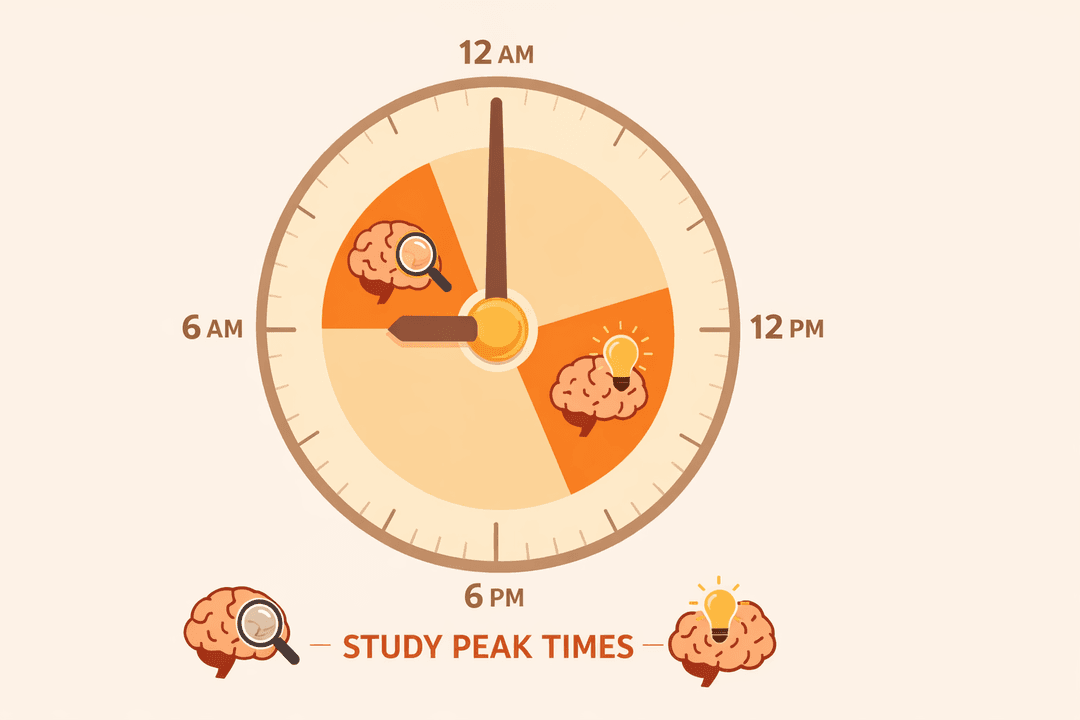
Golden Time: When to Study for Maximum Retention and Focus
You've probably noticed that studying at 6 AM feels different from studying at midnight. Some hours, your brain feels sharp and focused; others, you can barely keep your eyes open. This isn't random – it's science.
Understanding your "Golden Time" – the hours when your brain is primed for learning – can dramatically improve your study efficiency. Let's dive into the science and discover how to find yours.
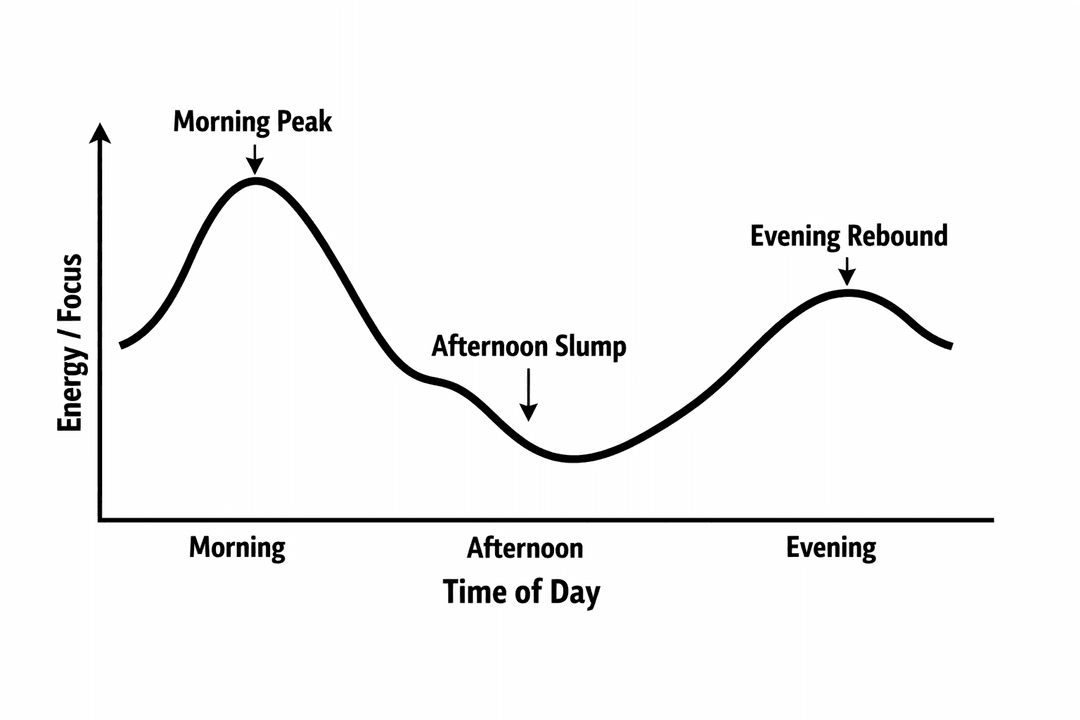
What is Golden Time?
Golden Time refers to the period during your day when your cognitive abilities are at their peak. During these hours:
- Focus comes easier - You can concentrate without constant mental battles
- Memory formation is enhanced - Information sticks better and longer
- Problem-solving improves - Complex concepts become clearer
- Mental fatigue is minimized - You can study longer without burnout
Everyone has Golden Time, but it occurs at different hours for different people.
The Science Behind Optimal Study Times
Your Circadian Rhythm
Your body runs on a 24-hour internal clock called the circadian rhythm. This rhythm affects:
- Hormone levels (cortisol, melatonin)
- Body temperature
- Alertness and drowsiness
- Cognitive performance
Research shows that cognitive abilities don't remain constant throughout the day – they follow predictable patterns based on this internal clock.
Chronotypes: Are You a Lion, Bear, Wolf, or Dolphin?
Sleep researchers have identified four main chronotypes that describe when people naturally feel most alert:
1. Lion (Early Bird) - 15% of population
- Peak productivity: 8 AM - 12 PM
- Best for: Morning study sessions
- Challenge: Energy drops sharply after lunch
2. Bear (Middle Ground) - 55% of population
- Peak productivity: 10 AM - 2 PM
- Best for: Mid-morning to early afternoon study
- Challenge: Afternoon slump around 3 PM
3. Wolf (Night Owl) - 15% of population
- Peak productivity: 5 PM - 12 AM
- Best for: Evening and night study sessions
- Challenge: Mornings are extremely difficult
4. Dolphin (Light Sleeper) - 10% of population
- Peak productivity: 10 AM - 12 PM (short window)
- Best for: Brief, focused study bursts
- Challenge: Alertness is unpredictable
How to Find Your Personal Golden Time
Method 1: The Two-Week Tracking Experiment
Track your study sessions for two weeks:
- Study at different times - Morning, afternoon, evening, night
- Rate each session (1-10) on:
- Focus level
- Material retention
- Energy afterwards
- Review patterns - Look for consistently high scores
Method 2: The Quick Assessment
Answer these questions honestly:
- If you had no obligations, when would you naturally wake up?
- When do you feel most mentally sharp?
- When do you prefer to do creative work?
- How long after waking do you feel fully alert?
Your answers will point you toward your chronotype.
Method 3: Use Stuley's Golden Time Tracker
Stuley includes a built-in Golden Time feature that:
- Tracks your study performance over time
- Analyzes when you learn most effectively
- Recommends optimal study windows
- Sends smart reminders during your peak hours
The Three Study Zones
Once you know your Golden Time, organize your studying into three zones:
Zone 1: Golden Time (Peak Hours)
Use for:
- Learning new, difficult concepts
- Subjects requiring deep understanding
- Problem-solving and analysis
- Active recall and testing
Why: Your brain is at peak capacity for forming new neural connections.
Zone 2: Silver Time (Good Hours)
Use for:
- Reviewing previously learned material
- Organizing notes
- Practice problems you've seen before
- Collaborative study sessions
Why: Good enough for reinforcement, but not ideal for new learning.
Zone 3: Bronze Time (Low Energy Hours)
Use for:
- Administrative tasks (organizing, planning)
- Light review of familiar material
- Watching supplementary videos
- Creating study materials for later
Why: Save your energy for demanding work during better hours.
Optimizing Your Golden Time
Protect Your Peak Hours
Your Golden Time is precious – guard it fiercely:
- Block it on your calendar - Treat it as non-negotiable
- Minimize distractions - No phone, no social media
- Prepare in advance - Have materials ready before your peak hours start
- Communicate boundaries - Let others know you're unavailable
Don't Fight Your Biology
Many students make the mistake of forcing study sessions during their worst hours:
- Night owls trying to wake up at 5 AM
- Morning people pushing through late-night sessions
- Ignoring the afternoon slump
Result: Wasted time, poor retention, increased stress.
Instead, work with your biology, not against it.
The Role of Sleep in Golden Time
Your Golden Time doesn't exist in isolation – it's directly connected to sleep quality.
How Sleep Affects Peak Performance
- 7-9 hours of sleep is optimal for most adults
- Consistent sleep schedule strengthens your circadian rhythm
- Sleep deprivation eliminates your Golden Time entirely
- Naps (10-20 minutes) can restore afternoon performance
The Memory Consolidation Window
Here's a powerful tip: The hours just before sleep are excellent for review. During sleep, your brain consolidates memories from the day. Reviewing material before bed can enhance retention.
How Stuley Maximizes Your Golden Time
At Stuley, we've built features specifically designed to help you leverage Golden Time:
Smart Study Scheduling
Our AI analyzes your study patterns and performance to:
- Identify your personal Golden Time
- Schedule difficult material during peak hours
- Arrange reviews during optimal memory windows
- Avoid scheduling during your worst hours
Adaptive Notifications
Stuley sends reminders when your Golden Time approaches:
- "Your peak focus window starts in 15 minutes"
- "Great time for new material – you're entering Golden Time"
- "Energy typically drops soon – consider wrapping up new concepts"
Performance Analytics
Track how your study effectiveness varies by time:
- Hourly performance breakdown
- Weekly pattern analysis
- Recommendations for schedule optimization
Sample Study Schedules by Chronotype
Lion Schedule (Early Bird)
- 6:00 AM - Wake up, light exercise
- 7:00 AM - 9:00 AM - Deep study (new/hard material)
- 9:00 AM - 11:00 AM - Continue focused work
- 11:00 AM - 12:00 PM - Review and practice
- 12:00 PM - 2:00 PM - Lunch, light tasks
- 2:00 PM - 4:00 PM - Administrative work, planning
- 9:00 PM - Early bedtime
Wolf Schedule (Night Owl)
- 9:00 AM - Wake up (don't force earlier)
- 10:00 AM - 12:00 PM - Light review, admin tasks
- 12:00 PM - 3:00 PM - Lunch, errands, preparation
- 4:00 PM - 6:00 PM - Moderate study
- 6:00 PM - 8:00 PM - Dinner, break
- 8:00 PM - 12:00 AM - Deep study (peak hours)
- 1:00 AM - Bedtime
Common Golden Time Mistakes to Avoid
Mistake 1: Scheduling Hard Work During Low-Energy Hours
If you're a wolf forcing 6 AM study sessions, you're fighting biology.
Mistake 2: Wasting Golden Time on Easy Tasks
Don't spend peak hours answering emails or organizing notes.
Mistake 3: Ignoring the Afternoon Slump
Most people experience reduced alertness around 2-4 PM. Plan accordingly.
Mistake 4: Inconsistent Schedules
Constantly shifting your study times prevents your body from establishing optimal rhythms.
Conclusion
Not all study hours are created equal. By understanding and leveraging your Golden Time, you can:
- Learn more in less time
- Reduce mental fatigue and frustration
- Improve long-term retention
- Feel more confident and prepared
The key is self-awareness: know your chronotype, track your performance, and structure your study around your brain's natural rhythms.
Your Golden Time is waiting to be discovered. Use it wisely.
Let Stuley help you find and optimize your Golden Time. Start studying smarter with AI-powered scheduling and performance tracking.


